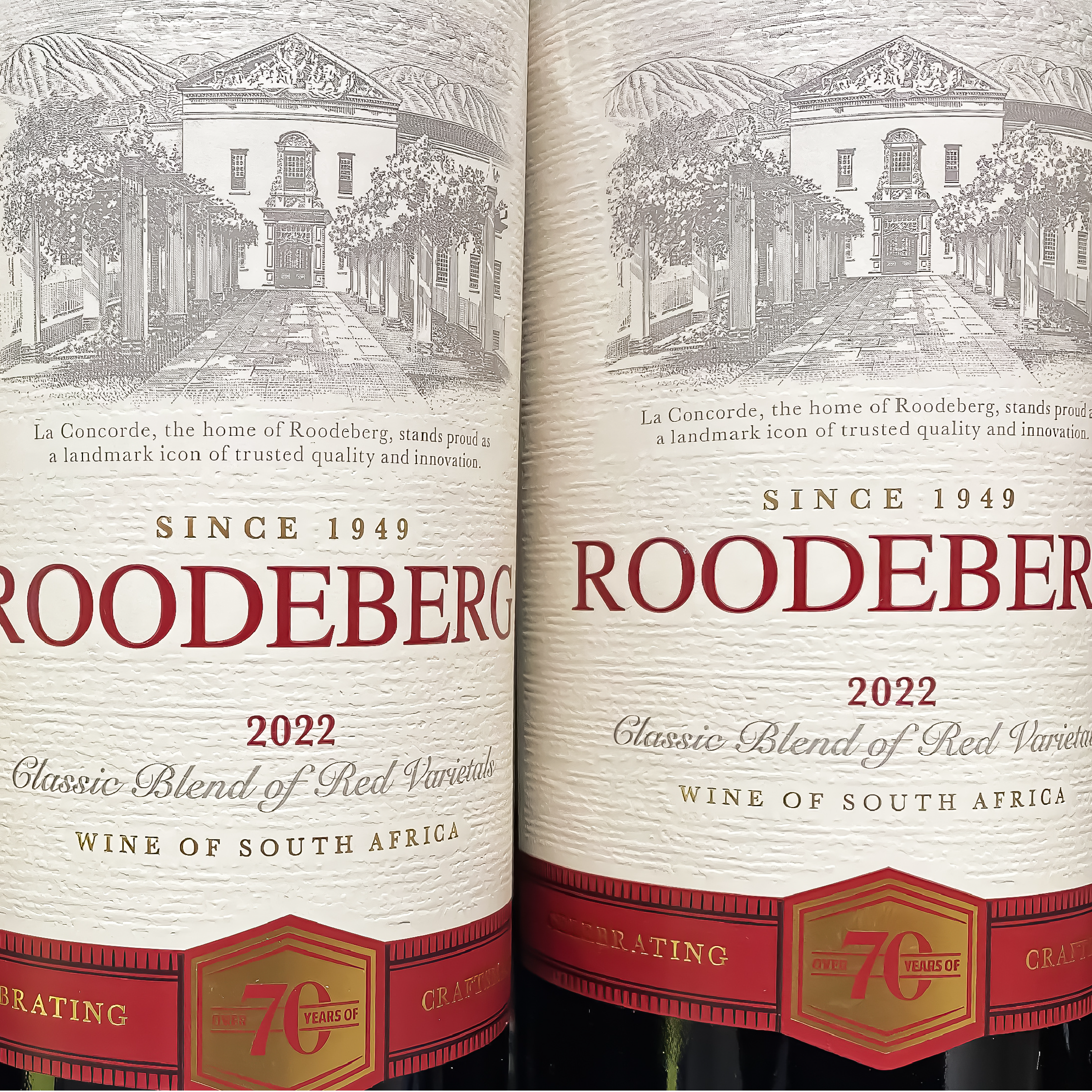
The first grapevines were planted in the Cape region inthe 17th century. At the time,Constantiawine was considered one of the finest wines and was served at the tables of European monarchs. A few years later, French Huguenots developed viticulture by bringing their expertise gained in France’s finest vineyards; it was during this period that South African wine was born.
However, in 1886, phylloxera destroyed the entire South African vineyard. The grape varieties planted afterward were, unfortunately, of poor quality. It wasn’t until 1925 that high-quality vines returned, thanks to Professor Perold, who createdPinotage—the variety that is now emblematic of the country, resulting from a cross between Cinsaut and Pinot Noir. South African viticulture has since adopted a quality-focused strategy, marked by the creation of a viticulture research center, local cooperatives identifying distinct terroirs, and “wine routes” to develop wine tourism.
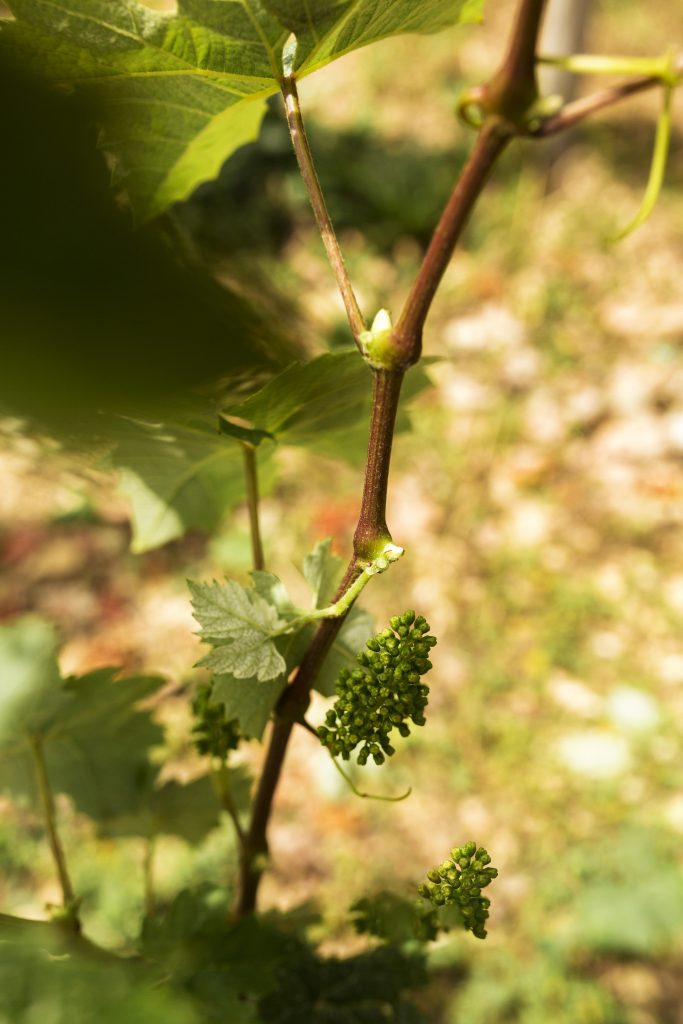
Since the late 1990s,the Stellenbosch wine regionhas been booming. Winemakers are experimenting with a variety of approaches and producing white wines similar to those of the Languedoc, with a blend of Sauvignon Blanc, Sémillon, Chenin Blanc, and Chardonnay. As for reds, although Pinot Noir is gaining ground, it is not well suited to the country’s hot climate.
Today, the vineyard is planted with 56% white grape varieties and 44% red grape varieties across approximately 100,000 hectares (almost equivalent to the Bordeaux vineyard), compared to 84% white grape varieties in 1990. Chenin Blanc remains the dominant variety, accounting for 18% of plantings, ahead of Cabernet Sauvignon, which represents 12% of the total area. Pinotage, with 6,500 hectares, is becoming increasingly prevalent; the Bellevue Morkel estate now boasts South Africa’s oldest Pinotage vines. There are approximately 4,000 producers, and nearly 50% of production is now exported.
Set out to explore the oldest wine-producing region in the New World. Travel along the various wine routes, discover the different grape varieties, and taste the wines that have earned the region its worldwide reputation.
On the South African Wine Route, you’ll love the selection of the region’s iconic vineyards, charming and unique accommodations, and a program that combines wine, culture, and fine dining!
Set out to explore South Africa’s wine country on a wine-tasting getaway through the Western Cape region. Whether you’re a casual wine lover or a connoisseur, discover the diversity of South African wines: blends, organic wines, and, of course, the famous Pinotage.
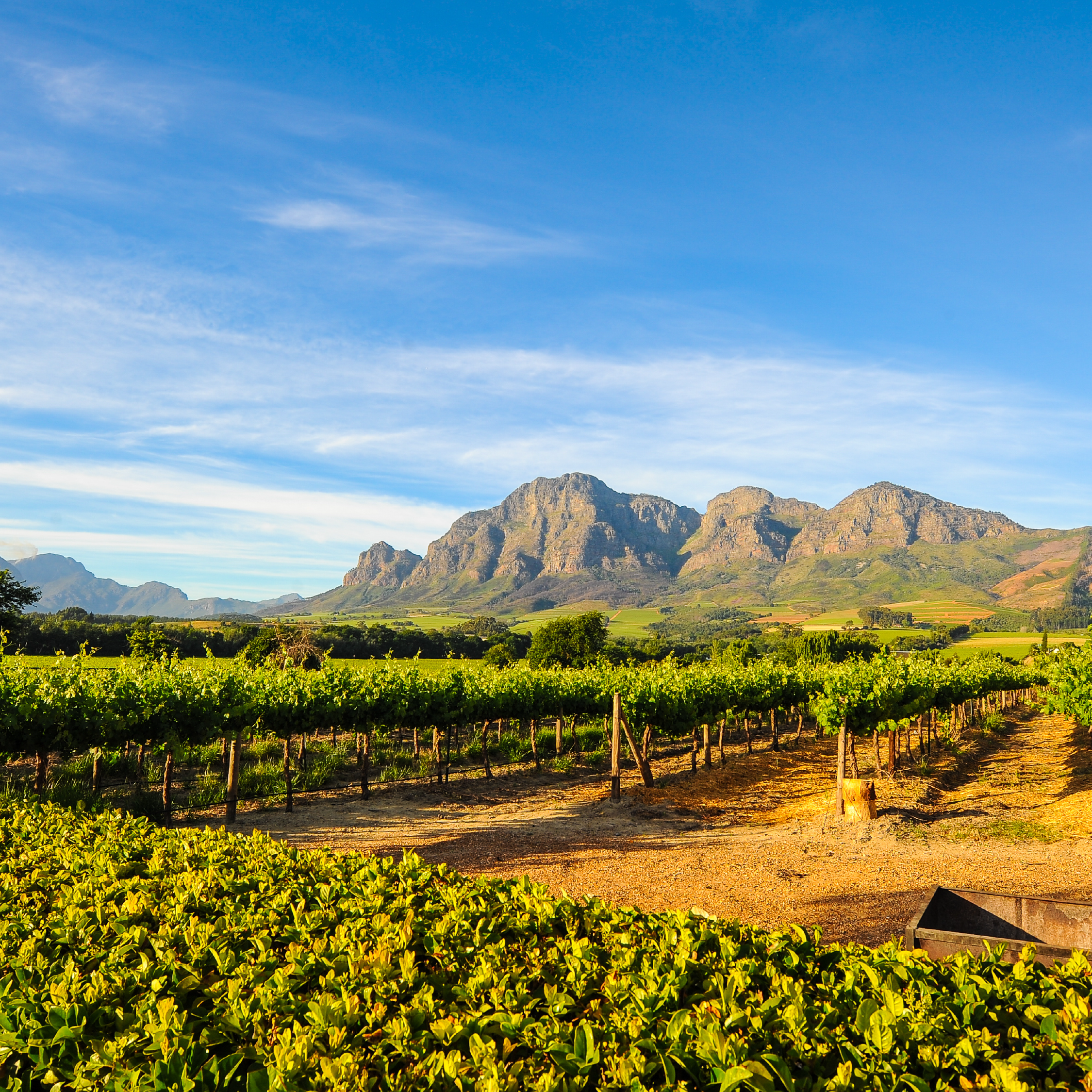
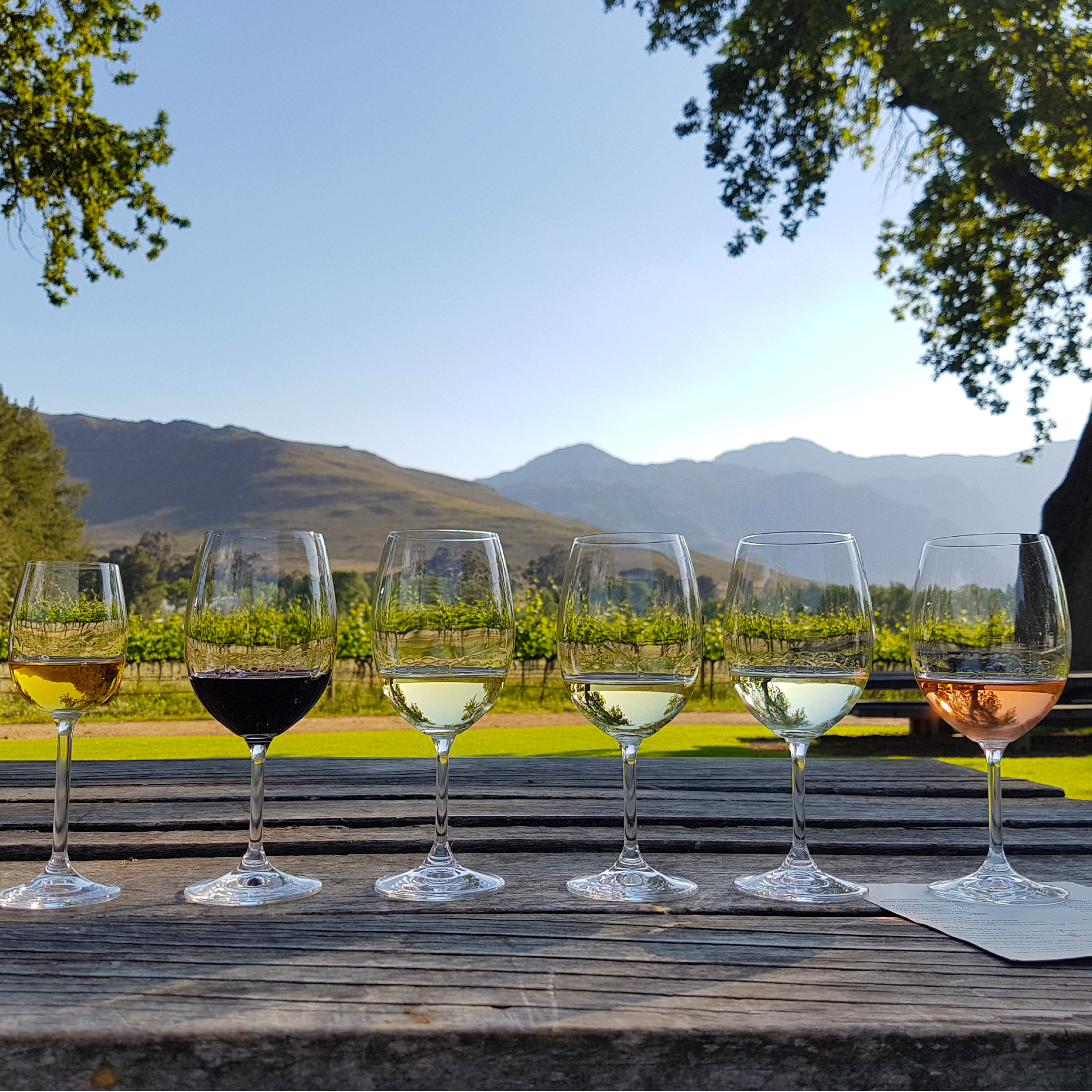
Since South Africa’s vineyards are concentrated in the Western Cape, you can explore the various wine regions, terroirs, styles, and ranges of wine. Explore the various wine routes, discover the different grape varieties, and taste the wines that have brought the country worldwide fame. Between Stellenbosch, Franschhoek, and Tulbagh, let yourself be surprised by delicious Chenin Blanc, Shiraz, Merlot, or even its famous Pinotage—all part of the diversity unique to the Rainbow Nation.
Pinotage, a grape variety native to South Africa, was created in 1924 by Abraham Perold, an agricultural engineer at the University of Stellenbosch. It is a cross between Pinot Noir and Cinsault (Cinsault was formerly known as Hermitage, hence the name Pinotage, a contraction of the words Pinot and Hermitage). You can discover it grown in various ways, resulting in different wine styles.